Executive Functioning Skills for Charter School Students: Practical Strategies That Work
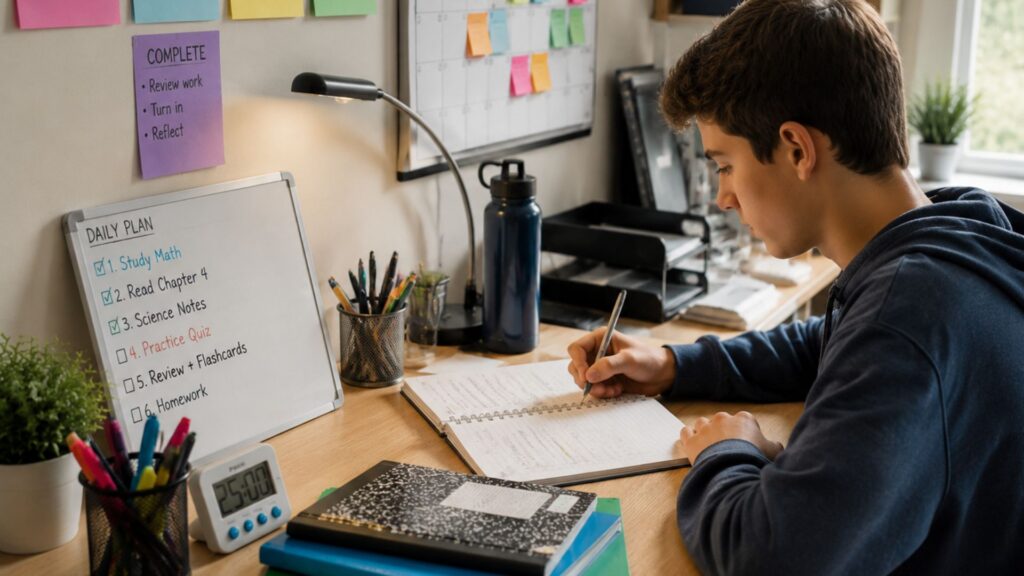
If your child struggles to start homework, loses track of assignments, or melts down when plans change, you might be dealing with something deeper than laziness or attitude. These are often signs of underdeveloped executive functioning skills, and they’re more common than most parents realize.
The good news is that these skills can be taught, practiced, and strengthened. And for families at Horizon Charter Schools, there are real, flexible ways to make that happen.
What Are Executive Functioning Skills, Exactly?
Executive functions are a set of mental processes that help people plan, focus, remember instructions, and manage multiple tasks at once. Think of them as the brain’s air traffic control system, handled largely by the frontal lobe.
Researcher and occupational therapist Sarah Ward describes executive functioning as the ability to “think about the future” and act accordingly. When a child struggles here, it is not always about intelligence. It is about cognition and self-management.
The Core Skills Involved
Executive functioning covers several interconnected abilities:
- Working memory – holding information in mind while using it
- Cognitive flexibility – adjusting when plans or expectations shift
- Inhibitory control – managing impulsivity and filtering distractions
- Emotional self-regulation – handling frustration, anxiety, and strong feelings
- Planning and organization – breaking tasks into steps and keeping track of materials
- Decision-making – weighing options and choosing a path forward
- Attention – sustaining focus, especially on tasks that feel tedious
Matthew Cruger, a neuropsychologist at the Child Mind Institute, notes that executive dysfunction does not look the same in every child. Some kids show it through explosive behavior. Others fall apart quietly, missing deadlines, losing books, and avoiding anything that feels hard.
Why Charter School Students Face Unique Challenges
Charter school students, particularly those in home study or blended learning models, often have more autonomy over their time and learning environment. That flexibility is a huge advantage, but it also demands stronger executive functioning skills earlier than a traditional classroom setting might require.
Without a bell schedule or a teacher physically present to prompt transitions, students must rely more heavily on their own planning, regulation, and attention to stay on track. For a child with attention deficit hyperactivity disorder (ADHD) or executive dysfunction, this setup can feel overwhelming without the right support in place.
That is not a flaw in the model. It is an opportunity to build these skills intentionally.
Practical Strategies That Actually Work
The Cult of Pedagogy and other respected education resources have documented what works when building executive functioning skills in students. The strategies below are grounded in real experience and adapted for home-based and flexible learning environments.
Build Routines That Reduce Decision Fatigue
Every decision a child has to make uses cognitive energy. When the structure of the day is predictable, the brain can focus on actual learning instead of figuring out what comes next.
Start with a consistent morning routine, a defined “school time” block, and a clear wind-down signal at the end of the day. Post a visual schedule somewhere visible, especially for younger students or those with attention challenges.
Teach Planning as a Skill, Not an Assumption
Many parents assume their child knows how to break a big project into steps. Most do not, at least not naturally. Planning is a skill that needs to be explicitly taught and modeled.
Walk through the process out loud: “We have a book report due Friday. Today is Monday. Let us figure out what needs to happen each day.” Show your child how to work backward from a deadline and assign small tasks to specific days. Over time, they begin to internalize that process.
Use External Tools to Support Working Memory
Working memory is the mental workspace where learning happens. When it is overloaded or underdeveloped, information slips through before it can be used or stored. External tools help fill that gap.
Encourage the use of planners, checklists, sticky notes, or digital reminders. Apps like Todoist or even a basic paper homework tracker can make a significant difference. The goal is not dependence on the tool, it is building the habit of organization until it becomes automatic.
Address Emotional Self-Regulation Before Academics
A dysregulated child cannot learn. This is not a parenting opinion; it is neuroscience. When the brain is flooded with stress or emotion, the frontal lobe – where executive functions live – essentially goes offline.
Before pushing through a difficult curriculum task, check in with how your child is feeling. Teach simple regulation strategies like box breathing, movement breaks, or a five-minute quiet reset.
Some families find that therapy or counseling supports this layer, especially when behavior patterns are persistent or intense.
Break the Problem Solving Loop
Problem solving is an executive function that kids with ADHD or executive dysfunction often struggle with in a specific way: they get stuck in the problem instead of moving toward a solution. They loop, escalate, or shut down.
One practical fix is to teach a simple decision-making framework: name the problem, list two or three possible solutions, pick one, and try it. It sounds basic because it is, and that is exactly the point. Simplicity gives the brain a clear path when it is overwhelmed.
Scaffold Independence Gradually
The goal of building executive functioning skills is not to create a perfectly organized child. It is to build real independence over time. That means scaffolding, providing just enough support to allow success, then slowly pulling back.
At Horizon Charter Schools, supervising teachers and parent mentors work alongside families to identify where a student needs more structure and where they are ready to take ownership. This collaborative approach is central to how the school operates.
Supporting Students With ADHD and Executive Dysfunction
Attention deficit hyperactivity disorder is one of the most common reasons a student struggles with executive functioning skills. But ADHD is not the only cause. Anxiety, learning differences, developmental timing, and even stress can all affect how these skills develop.
Weathers, a specialist in learning and behavior, points out that the experience of repeated failure is itself a barrier. When a child has failed to stay organized or follow through too many times, they stop believing they can. That learned helplessness is often mistaken for lack of effort or motivation.
Reframing the conversation matters. These are skills, not character flaws. And skills can be learned.
When to Seek Additional Help
If strategies at home are not making a dent, or if your child’s struggles are significantly affecting their quality of life, it may be time to look into formal evaluation, therapy, or additional academic support. A school psychologist, occupational therapist, or educational therapist can offer targeted interventions that go beyond what daily routines can address.
Horizon Charter Schools families have access to resources and credentialed teachers who can help identify when additional support may be warranted and how to access it.
How Horizon Charter Schools Supports Executive Functioning Development
Horizon’s learning models are built with student-centered flexibility in mind, which means there is real room to make executive functioning skill-building part of the curriculum rather than a footnote.
Through the Supported Home Study and Blended Learning programs, students can work on these skills within a structure that fits their individual needs. Supervising teachers and parent mentors provide guidance, check-ins, and resources that help families stay proactive rather than reactive.
The school’s emphasis on a growth mindset aligns directly with how executive functioning skills develop. Progress is not linear, and setbacks are part of learning. That shared understanding between families and educators makes a meaningful difference.
How to Build Executive Functioning Skills for Charter School Students
Executive functioning skills are not fixed traits. They are learnable, and every child can make progress with the right support and consistency. Whether your student is working independently at home or in a blended environment, the strategies above offer a solid starting point. If you want to learn more about how Horizon supports flexible, student-centered learning designed around your child’s strengths, explore our Supported Home Study program to see how it works in practice.