How to Praise Your Kids
September 11, 2026
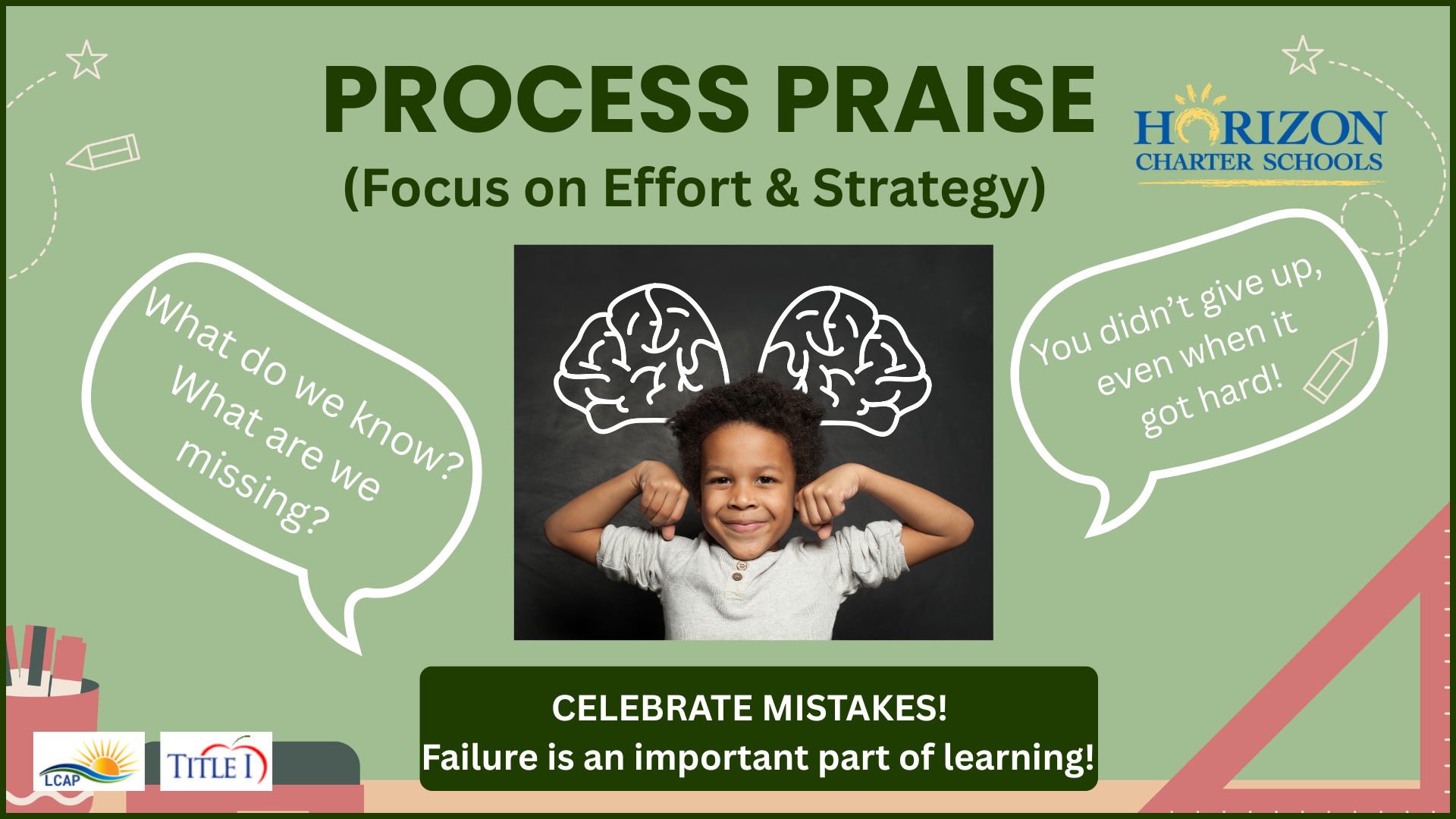
So They Aren’t Afraid to Fail
When children try something hard, the way we cheer them on makes a huge difference in how they handle mistakes. It is natural to want to tell your child “You’re so smart!” when they get a good grade, but researchers like Dr. Carol Dweck have found that praising a child’s natural intelligence can actually make them afraid of making mistakes. When kids think success is all about being “smart,” failing at a tough assignment feels like proof that they aren’t smart anymore. To help our kids embrace challenges without fear, we need to praise their hard work, their strategies, and their choices instead of their talent.
When you notice your child working on a lesson, focus your compliments on their actions and process. For example, instead of saying, “You are a natural artist!” try saying, “I love how you kept trying different colors until you found the one you wanted.” Research shows that giving specific praise about effort gives children a mental toolkit they can use whenever they get stuck. You can also help them build confidence by asking questions that let them judge their own work, such as “How did it feel when you finally solved that puzzle?” This simple shift teaches kids that mistakes aren’t something to hide from—they are just part of learning something new.
3 Quick Tips
- Praise the path, not the person. Swap labels like “You’re a genius!” for specific observations like “I noticed how you used a diagram to solve that word problem.”
- Treat mistakes as discovery. When your child makes an error, say, “That didn’t work out, but what did we learn from trying it?” to keep their focus on growth rather than perfection.
- Ask before you praise. Build self-reliance by asking “How do you feel about what you created?” before offering your own compliment.
Resources & Further Reading
- Growth Mindset for Families: Learn more about Dr. Carol Dweck’s research on effort and growth mindsets at Mindset Works.
- The Power of Process Praise: Read about how early praise shapes long-term confidence in Elizabeth Gunderson’s research via the Society for Research in Child Development.
- Effective Feedback in Home Education: Explore John Hattie’s levels of feedback and how they apply to learning at Visible Learning.
- Handling Failure Constructively: Discover how parental attitudes toward mistakes impact children through Kyla Haimovitz and Carol Dweck’s study in Psychological Science.
Related Posts

Building Confident, Independent Learners at Home
October 15, 2026
By Heidi Polston, Supervising Teacher & Family Mentor As Home Educators, we naturally want to help our children when we see them struggling. Sometimes, though, one of the best ways we can…
Read More about Building Confident, Independent Learners at Home

Small Steps to Big Connections: Conversation Starters for Families
September 11, 2026
At Horizon Charter School, building a vibrant, supportive community is at the heart of everything we do. Through field trips, park days, and schoolwide activities, our ongoing goal is to create warm,…
Read More about Small Steps to Big Connections: Conversation Starters for Families

Grit, Determination, and Mentorship: A Horizon Success Story
September 11, 2026
Supervising teacher Jeff Quayle recently received a message from the mother of 2021 Horizon Charter Schools’ graduate, Nicholas Bevzyuk, reflecting on the quiet impact of dedicated mentorship. In school, Nick was not…
Read More about Grit, Determination, and Mentorship: A Horizon Success Story