Socialization In Public Schools Vs Charter School Homeschool: What Really Changes?
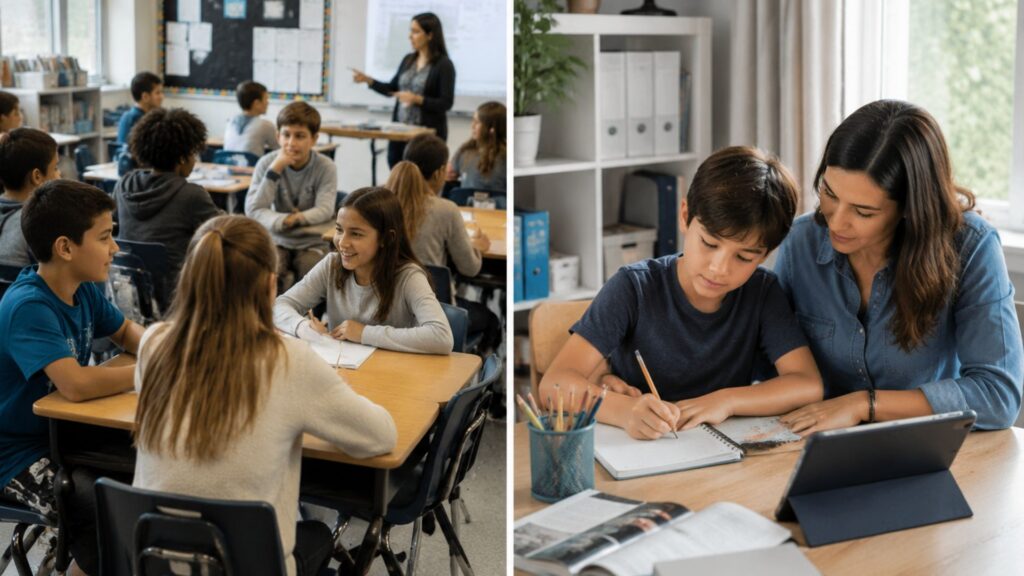
If you’ve been researching education options for your child, the question of socialization has probably come up more than once. It’s one of the most common concerns parents raise, and honestly, it deserves a real answer rather than a quick dismissal.
The short version? Socialization looks different across different learning environments, but “different” does not mean “worse.” Here’s what actually changes when you move from a traditional public school setting to a charter school homeschool model and why the distinction matters more than most people realize.
What Socialization Actually Means in an Educational Context
Before comparing anything, it helps to agree on what socialization actually is. In education, socialization refers to the process by which a child learns to interact with others, understand social norms, build communication skills, and become a contributing member of their community.
It’s not just about being in a room full of other kids. It’s about learning how to work through conflict, collaborate on shared goals, develop empathy, and navigate relationships with people of different ages and backgrounds.
That framing matters because it shifts the conversation away from “does your child have classmates?” to something much more meaningful.
How Public Schools Handle Socialization
In a traditional public school, socialization is largely built into the structure. Children spend most of their day in a classroom with peers of the same age. They share recess, lunch, group projects, and extracurricular activities.
There are real advantages to this. Children develop routines, learn to follow collective rules, and build friendships through consistent daily contact. Teachers also observe social dynamics in real time and can intervene when issues arise.
However, this model has limitations that are often overlooked. The age-segregated classroom means children primarily interact with others at the same developmental stage. Social hierarchies and peer pressure can be intense, and not every child thrives in that environment.
For a child who learns differently, struggles with anxiety, or simply doesn’t fit the traditional classroom setting, the public school social experience can feel isolating rather than connecting.
How Charter School Homeschool Handles Socialization
Here’s where things get interesting. Many people assume that homeschooling means a child sits alone at a kitchen table with no social contact. That image is outdated, and it’s especially inaccurate when we’re talking about a structured charter school homeschool model.
At Horizon Charter Schools, for example, students are part of a broader learning community. Families connect with credentialed supervising teachers, participate in workshops, and engage with parent mentors who help guide both academics and social development.
Charter homeschooling offers a wide range of social opportunities. Children interact with peers across age groups, participate in community-based learning experiences, join co-ops, pursue extracurricular interests, and often spend time in real-world settings that traditional classrooms simply can’t replicate.
Socialization Through Flexible Learning Models
One of the most significant shifts in a charter school homeschool environment is that socialization becomes intentional rather than incidental. Parents and educators work together to design experiences that build genuine social skills rather than just proximity to other kids.
Horizon’s blended learning model, for instance, combines independent study with structured group opportunities. This gives children the best of both worlds – time to develop at their own pace and meaningful interaction with others when it matters most.
Hybrid learning approaches also allow students to participate in some in-person instruction while maintaining the flexibility of home-based learning. This middle-ground approach has become increasingly popular with families who want structure without rigidity.
The Role of the Parent in Social Development
In a charter school homeschool model, the parent plays a much more active role than in traditional education. This is not a burden; it’s actually a significant advantage for many families.
Parents can observe how their child interacts socially, identify areas for growth, and choose activities that align with their child’s personality and interests. A shy child isn’t forced into overwhelming group settings before they’re ready. An outgoing child can pursue team sports, theater, or community volunteering in meaningful ways.
Curriculum choices also play a role here. Families working within a structured charter school program have access to vetted resources that incorporate social-emotional learning alongside mathematics, language arts, and other core subjects. The learning doesn’t happen in isolation – it’s designed to reflect real life.
What Research Actually Says About Homeschool Socialization
This is a question that has been studied for decades, particularly as charter schools in the United States have grown in number and scope. The research generally shows that homeschooled children are not socially behind their publicly schooled peers.
In fact, many studies find that homeschooled students demonstrate strong communication skills, comfort interacting with adults, and high levels of civic engagement as they grow older. They tend to be less dependent on peer approval, which contributes to stronger self-direction and independence.
That’s not a knock against public school. It’s simply evidence that social development does not require a traditional classroom setting to thrive.
Socialization Looks Different at Different Stages
It’s worth noting that socialization needs to change significantly depending on a child’s age. A kindergarten student benefits enormously from play-based learning and early peer interaction. A high schooler preparing for university or a career needs a different kind of social readiness – one that includes professional communication, self-management, and real-world exposure.
Charter school homeschool programs are well-suited to adapt across these stages. Younger children might participate in more structured group activities, while older students might take on internships, community projects, or dual-enrollment courses that build adult-level social and professional skills.
Common Concerns Parents Have About Socialization
Let’s be direct about the questions that come up most often.
“Will my child make friends?”
Yes. Charter school homeschool families often build tight-knit communities through co-ops, extracurriculars, park days, and learning groups. The friendships formed this way tend to be intentional and meaningful.
“Will my child be prepared for college or work?”
A child who has learned to manage their own time, communicate with adults and peers, advocate for their needs, and pursue genuine interests is exceptionally well-prepared for what comes after school.
“What about culture and exposure to diversity?”
This is a fair concern. The advantage of a well-supported charter school program is that it actively encourages community involvement and exposure to a wide range of people, ideas, and experiences. Culture and community are built intentionally, not left to chance.
“What about tuition payments and cost?”
Horizon Charter Schools is a public charter school, which means there are no tuition payments for enrolled families. The program is publicly funded, removing a significant financial barrier that might otherwise prevent families from accessing flexible education options.
What Horizon Charter Schools Offers That Changes the Equation
Horizon has been supporting home educators since 1993. That’s decades of experience helping families navigate the real challenges of personalized education – including socialization.
The school offers on-demand learning, blended learning, supported home study, and alternative home study options. Each path is supported by credentialed teachers, parent mentors, and a community of families who understand what it means to choose a different approach to education.
Families don’t have to figure this out alone. The infrastructure is there, and it’s been refined over thirty years of working with real students and real families across Northern California.
The goal isn’t just academic success; it’s helping children become capable, confident, and connected to their communities.
Which School Model Supports Socialization Best?
Socialization in public schools and charter school homeschool environments is genuinely different, but that doesn’t mean it is deficient. When learning is personalized and community is intentionally built, children can develop social skills that are just as strong – and often more adaptable – than those formed in traditional classrooms.
If you’re ready to explore what this kind of education could look like for your family, take a closer look at Horizon’s supported home study program to see how structure, flexibility, and community can work together.