Elementary to Middle School Transition in Charter Schools
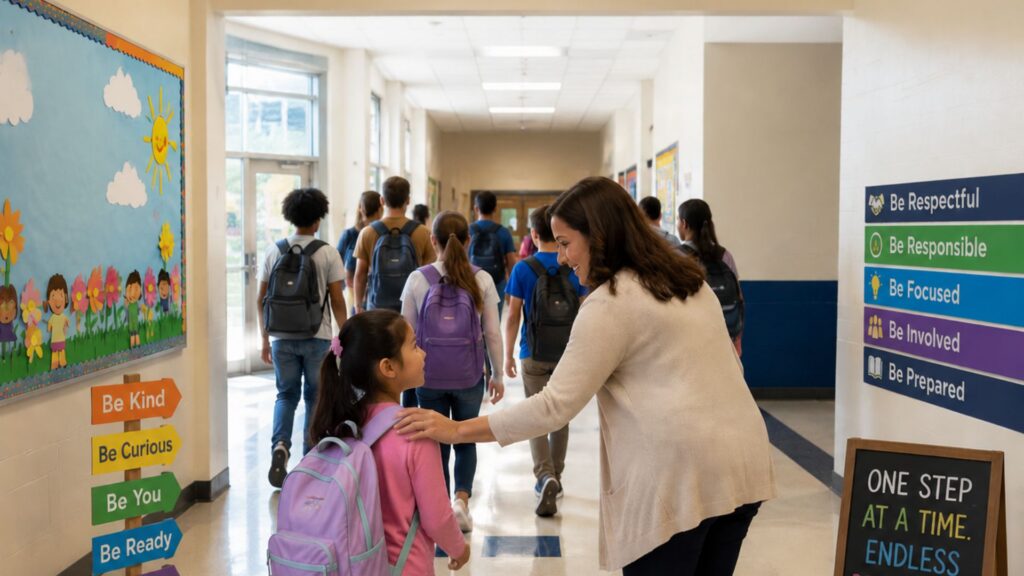
The jump from elementary to middle school is one of the biggest shifts a child will face in his or her K-12 journey. New teachers, harder subjects, more independence – it can feel overwhelming for both kids and parents.
But here is the good news: families in a charter school environment often have more support, more flexibility, and more personalized guidance during this transition than in traditional public school settings. Understanding what to expect can make all the difference.
Why the Elementary to Middle School Transition Feels So Big
At the primary school level, a child typically has one main teacher who knows them well. Middle school flips that entirely. Suddenly, your child is navigating multiple teachers, different classrooms, and a whole new social landscape.
The academic expectations also shift significantly. Students are expected to manage their own time, track assignments across subjects, and advocate for themselves in ways they never had to before. That is a lot to ask of an 11 or 12-year-old.
How Charter Schools Handle This Differently
Charter schools like Horizon Charter Schools are built around personalized, student-centered learning. That means the transition is not treated as a one-size-fits-all event.
Instead of pushing every child through the same process at the same pace, charter school educators work with families to identify where each student is academically, socially, and emotionally. This collaborative approach gives families real input and real support.
The Role of the Supervising Teacher
At Horizon, credentialed supervising teachers partner directly with home educators and families throughout the K-12 experience. During the transition from elementary to middle school, these teachers play a critical role in helping students build the skills they need – organization, time management, and self-advocacy.
This is different from what you might find at a Metro Charter Academy or a large traditional school, where a school counselor may be the only point of contact during such transitions. At Horizon, the support is woven into the everyday learning relationship.
What Families Can Do to Prepare
Preparation matters. The more intentional you are leading up to middle school, the smoother the adjustment will be for your child.
- Talk openly about the change. Ask your child what they are excited about and what worries them. Extended family members can also play a helpful role in normalizing this transition by sharing their own middle school experiences.
- Start building independence early. Let your child take ownership of their schedule and assignments before the transition happens. This is especially relevant in homeschooling or supported home study models, where self-direction is already part of the learning model.
- Connect with a school counselor or parent mentor. Horizon offers parent mentors and workshops specifically designed to support families through moments like this. Do not wait until something feels wrong – reach out early.
Extracurricular Activities and Social Development
One concern many parents have is whether their child will find their place socially in middle school. Extracurricular activities are one of the most effective tools for helping a child build friendships and confidence during this period.
Charter school models often provide more flexibility to explore interests outside of a rigid school-day schedule. Whether your child is drawn to music, coding, sports, or community service, having space to pursue those interests supports their overall growth in ways that go far beyond academics.
Personalized Learning Makes a Real Difference
Schools like Minnesota Transitions Charter School (MTCS) and programs such as CCA have approached the transition period with different levels of family involvement. What research consistently shows is that personalized attention during this window leads to better long-term outcomes.
Horizon’ s blended learning and on-demand learning options allow families to tailor the middle school experience to their child’s actual needs – not an average student’s needs. Educators like Latashia Allen, who champion student-centered approaches, reflect the kind of thinking that guides Horizon’s philosophy at every grade level.
Supported Home Study as a Transition Tool
For families who feel their child needs more time or a gentler on-ramp to middle school, Horizon’s Supported Home Study model offers a meaningful alternative. It keeps the parent deeply involved while still connecting the child to credentialed teacher oversight and structured academic progression.
This model can be especially valuable during the elementary to middle school transition, giving students the time to grow into the independence that middle school demands without throwing them into the deep end.
What to Expect in the Elementary-to-Middle-School Transition
The elementary-to-middle-school transition in a charter school setting does not have to be stressful. With the right support, clear communication, and a personalized approach, your child can step into middle school feeling ready and confident. Horizon Charter Schools has been walking alongside families through these moments since 1993. If you are ready to explore how a flexible, family-centered model can support your child’s next chapter, learn more about Horizon’s Supported Home Study program and take the first step together.