Are Charter Schools Good For Autism? What Parents Should Really Know
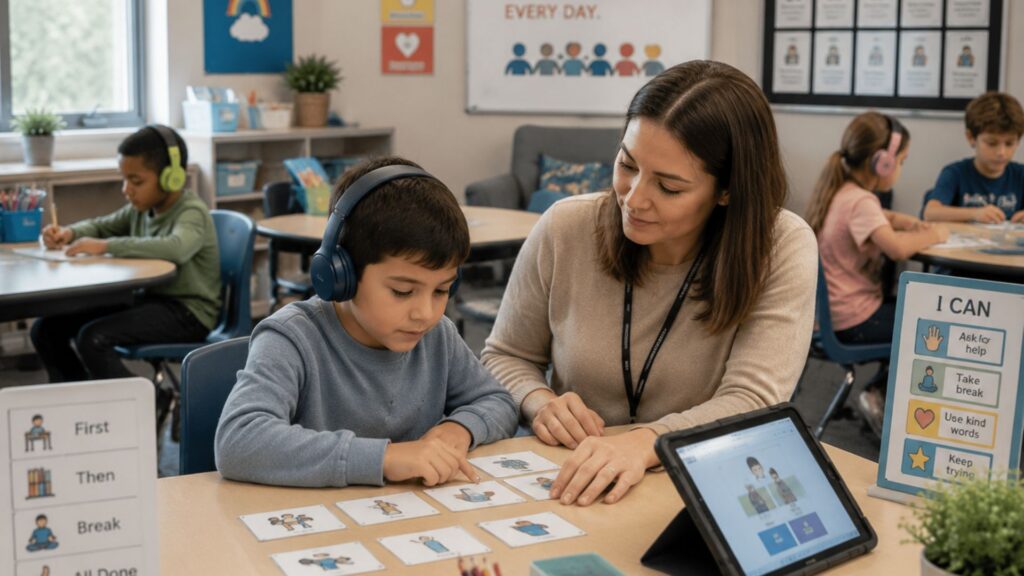
If you have a child with autism, you have probably spent a lot of time wondering whether the right school even exists. Traditional classrooms can feel rigid, overwhelming, or just not built with your child in mind. So when charter schools come up in conversation, the question is natural: are charter schools actually good for kids with autism, or is that just marketing?
The honest answer is: it depends, but for many families, charter schools have made a real and lasting difference.
What Charter Schools Are Actually Required to Do
Let’s start with the law, because this is where a lot of confusion happens.
A charter school is still a public school. That means it is legally required to follow the same federal special education laws as any traditional public school. Under the Individuals with Disabilities Education Act (IDEA), every child with a qualifying disability – including autism – has the right to a Free Appropriate Public Education, or FAPE.
That means if your child qualifies for an Individualized Education Program, or IEP, a charter school must honor it. Charter schools in the United States cannot legally turn away students because of a disability, and they cannot ignore or sidestep IEP requirements.
This is an important point for parents to hold onto. You do not lose your child’s legal protections by enrolling in a charter school.
Where Charter Schools Can Actually Shine for Autistic Learners
Here is where the conversation gets more interesting.
Many autistic children struggle not because they lack ability, but because traditional classroom environments are not designed for how they learn. Sensory overload, rigid scheduling, large group instruction, and limited flexibility can all work against a child who processes the world differently.
Here is where charter schools can actually shine for autistic learners.
Flexible Learning Environments
At a school like Horizon Charter Schools, students are not expected to fit into a single mold.
Programs like Supported Home Study and Blended Learning allow families to shape the learning environment around the child, rather than the other way around. For a child who struggles with nonverbal communication cues in a crowded classroom, or who needs more time to process information, this kind of flexibility is not a luxury. It is often the difference between thriving and shutting down.
Stronger Parent Involvement
In education, inclusion is not just about physical placement. It is about making sure every child is genuinely part of the learning process. At Horizon, parents work closely with credentialed supervising teachers to build a learning plan that reflects their child’s actual needs and goals.
That level of collaboration is hard to replicate in a traditional school setting.
A Calmer, More Controlled Setting
For many autistic children, the sensory and social demands of a traditional secondary school or even an elementary classroom can be exhausting. Learning at home or in a smaller, more controlled environment can reduce anxiety and build confidence in ways that show up in academic performance over time.
What to Watch Out For
Not every charter school is built the same way. Some have stronger special education support than others, and it is worth asking direct questions before you enroll.
Here are some things worth asking any charter school:
- Does the school have staff trained in autism support and special education?
- How does the school handle IEP implementation and annual reviews?
- What happens if my child needs additional services or therapy?
- How does the school communicate with parents about progress and challenges?
- What is the school’s policy on accommodations for standardized testing?
Good charter schools will welcome these questions. If a school gets defensive or vague, that tells you something important.
How Horizon Charter Schools Approaches Student-Centered Learning
Horizon Charter Schools has been serving families since 1993, and in that time, it has built a reputation for taking personalized education seriously. The school is fully accredited by WASC and recognized as a University of California A-G pathway school, which means students are not trading academic rigor for flexibility.
What sets Horizon apart for families of autistic children is the genuine commitment to meeting students where they are. Teachers and parent mentors work together to build learning plans that reflect each student’s strengths, not just their challenges. The goal is not just academic achievement – it is real-world readiness, independence, and confidence.
For families who have spent years fighting for their child to be seen in a traditional school setting, that kind of intentional support can feel like a turning point.
Are Charter Schools a Good Fit for Autism?
Charter schools are not automatically the right fit for every child with autism, but they offer something many traditional schools cannot: genuine flexibility and parent partnership. If your child learns differently, a program built around their needs may be exactly what changes the trajectory. Horizon Charter Schools has supported students with diverse learning needs for over 30 years.
To learn more about how their approach might work for your child, explore their supported home study program and see what a personalized education can look like.