Are Charter Schools Part Of School Districts? A Clear Answer For Parents
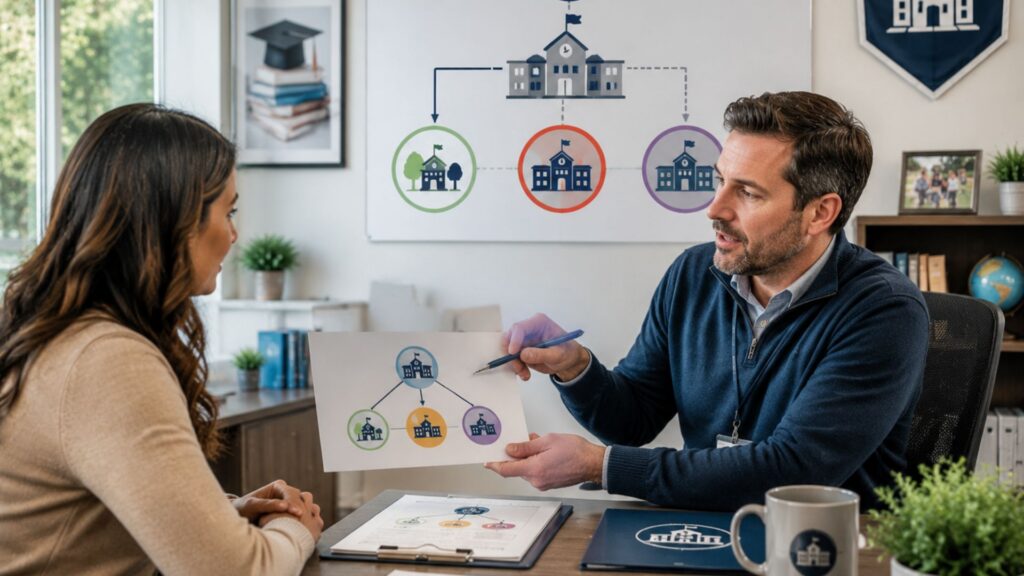
If you’ve been exploring school options for your child, you’ve probably run into the term “charter school” and wondered how it fits into the public education system. Are charter schools part of school districts? Do they answer to the same rules? And how does any of this affect your family?
These are fair questions, and the answers matter more than most people realize. Let’s break it all down clearly.
What Is a Charter School, Exactly?
A charter school is a publicly funded school that operates under a charter – essentially a contract – granted by a government authority. That authority could be a local school district, a state agency, or another approved entity, depending on the state.
Charter schools in the United States were designed to give educators and families more flexibility in how learning happens, while still being held to academic accountability standards.
Unlike traditional public schools, they often have more freedom over curriculum, staffing, and instructional methods.
Importantly, charter schools are free to attend. There are no tuition payments, and schools cannot charge enrollment fees. They are funded through public tax dollars, much like any state school.
So Are Charter Schools Part Of School Districts?
Here is where it gets a little nuanced. The short answer is: sometimes yes, sometimes no – and it depends on the state and the specific charter.
In many states, a charter school is authorized by a local school district but operates as a separate, independent entity. It does not fall directly under the district’s day-to-day control. The school has its own board of directors, its own leadership, and its own operational structure.
In other cases, especially in states with strong charter oversight frameworks, the charter may be granted by a state-level body rather than a local district. This creates even more distance between the charter school and the traditional district system.
How Law and Regulation Shape the Answer
The relationship between charter schools and school districts is largely defined by state law and regulation. Each state has its own rules about who can authorize a charter, how accountability is enforced, and what oversight looks like.
For example, some states have bodies specifically created to manage charter oversight – similar to how North Carolina has its own North Carolina Office of Charter Schools, or how California handles appeals through processes involving the Charter School Appeal Commission. These oversight structures help ensure that charter schools meet performance standards even when they operate outside a traditional district.
This legal framework is what allows charter schools to serve students differently while still being accountable to public education standards.
Key Ways Charter Schools Differ From Traditional District Schools
Understanding what separates a charter school from a regular public school can help parents make a more informed choice.
- Governance: A charter school is governed by its own board of directors rather than a school district board.
- Curriculum: Charter schools often develop their own curriculum and instructional approach, which gives families more options beyond the standardized district model.
- Enrollment: Many charter schools use a lottery system when demand exceeds available spots, rather than assigning students based on a geographic zone.
- Teacher flexibility: While teachers at charter schools are typically credentialed educators, the school may have more flexibility in how they are hired and how they structure instruction.
- Accountability: Charter schools must meet performance benchmarks outlined in their charter. Failing to do so can result in the charter being revoked – a form of accountability that is tied directly to results.
What About Students With Disabilities or Special Needs?
One important consideration for parents is how charter schools handle special education.
Charter schools are legally required to serve students with disabilities and provide appropriate accommodations, just like traditional public schools. Federal law ensures that no child is excluded based on a disability.
This is an area where inequality can sometimes surface if schools are not careful. Horizon Charter Schools takes this responsibility seriously, working with families to ensure that every student has a genuine path to success.
Are Charter Schools Nonprofit Organizations?
In most cases, yes. Charter schools typically operate as nonprofit organizations. This means that the school’s resources are directed back into the education of students rather than generating profit for owners or investors.
This structure is part of what makes charter schools feel distinct from private schools. There are no tuition payments, no selective admissions based on wealth, and no profit motive driving decisions.
How Horizon Charter Schools Fits Into This Picture
Horizon Charter Schools has been serving families since 1993, making it one of the most established charter schools in Northern California. Based in Lincoln, CA, Horizon operates as a public charter school – free to attend, publicly funded, and accountable to both its charter and state education standards.
Horizon does not operate under a local school district. Instead, it partners directly with families and credentialed teachers to support home-based and flexible learning models. Whether a family is looking at supported home study or blended learning, the school ensures every child has access to a rigorous, personalized education from early grades through middle school and beyond.
Horizon is fully accredited by WASC and recognized as a University of California A-G pathway school, which speaks to its academic credibility and its commitment to preparing students for higher education and real-world readiness.
What Parents Should Know About Charter Schools
Charter schools exist in a unique space – publicly funded and accountable, but often independent from local school districts. For parents in Lincoln, CA, exploring alternatives to traditional schooling, understanding this distinction is the first step toward finding the right fit.
Horizon Charter Schools offers flexible, personalized learning options backed by decades of experience and a genuine commitment to every child’s success. To learn more about how Horizon’s supported home study program works, explore the Supported Home Study page and see if it’s the right path for your family. You can also reach Horizon directly at 916-408-5200.